
ÚTLÆGR
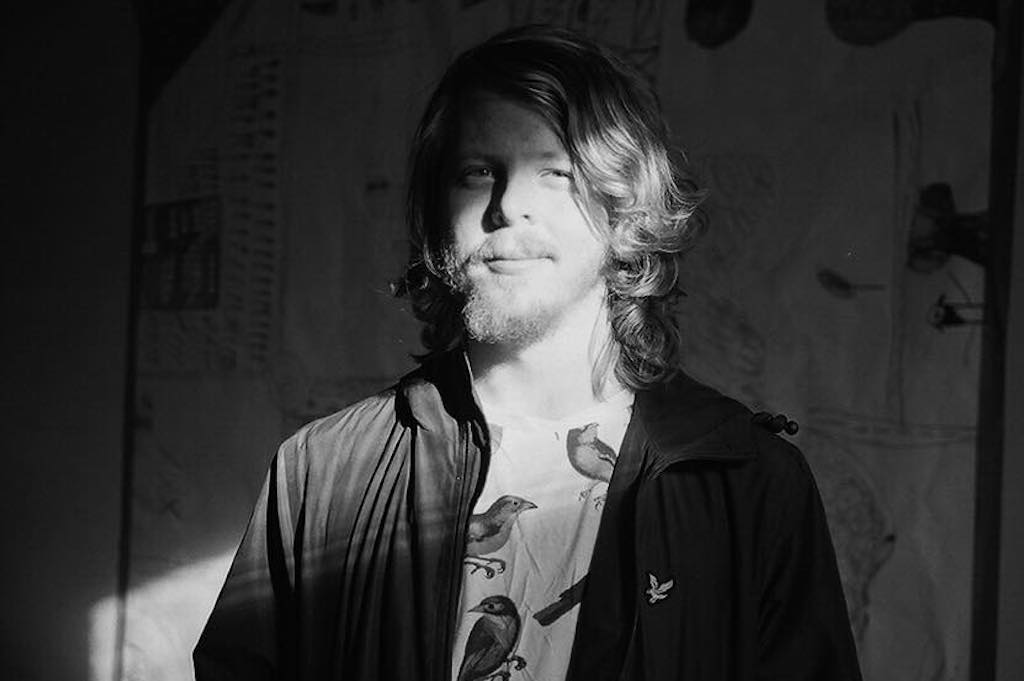
ÚTLÆGR means "outlaw" in old Norse. Led by Norwegian guitarist, improviser and composer Hein Westgaard, the show explores peripheral sonic territories across time and space through thematic programs focusing on lesser known styles, epochs and sound worlds that deserve a wider audience.
w/ Hein Westgaard
Hein Westgaard is a Norwegian guitarist, improviser and composer, currently based in Copenhagen, Denmark. In addition to his own genre-bending Hein Westgaard Trio mixing folk, rock, country, and free jazz, he can be heard in the post-minimalistic quartet Ototoi, as part of the contemporary composers group Ensemble Ektos, in duo with the Lithuanian double bassist Aurelijus Uzameckis or the New Zealand pianist Alexander Ventling, playing ad-hoc free improvised constellations, or simply performing in the solo acoustic guitar format where he focuses on his own instrumental songs in the fingerpicking tradition.
Podcast


For this episode we are focusing on different non-western musical expressions in the moments where they have taken up elements from western cultural production introduced (forced?) through colonial powers, like the saxophone, the piano, the electric guitar, or the marching band, and made it fit to their local traditions in different ways. Cultures collide, past and future mix up and something weird but beautiful comes out of it! Enjoy some amazing glocal music from Mauritania, Peru, Myanmar, Ethiopia, Hawaii, Indonesia, Ghana, India, and Mexico.
Tracklist:
- Instrumental Musik Bambu Klarinet - O Ina Ni Keke
- Kebrou - Banjey 'Boogie' ( Wallahi Le Zein! )
- Burmese Guitar · U Sein Maung (1953 Folkways Records)
- Than Yoe (Simple Melody) · U Yee Nwe (The Spellbinding Piano Of Burma, 2005, Shanachie)
- Orquesta Típica Juventud Huayucachina - Expreso Molina
- Orquesta Típica Juventud Huayucachina - Mantaro Huayta
- Akurofufu Brass Band – Akwanwaa Hiani
- Sukumar Prasad - Intha Chalamu
- Sacred Music: Entering House / Setting the Altar / Ritual Begins / Offering Is Consecrated / Preparing to Leave House (Sacred Guitar and Violin Music of the Modern Aztecs, 1977 Folkways Records)
- Philip Gabby Pahinui - Hula Medley
- Huehue (Hawaiian Hula) - Sam Ku West - Hawaiian Steel Guitar Classics: 1927-1938
- Gétatchèw Mèkurya - Yèné Hassab Guadegna
Hello everyone and welcome to the first episode of UTLÆGR, where i try to bring different kinds of underappreciated music to your precious ears, dear listeners of the world.
To kick off this series I am going to simultaneously trace evolution of granular synthesis in electroacoustic music along with the tape music experimentation amongst the early pioneers in the pop and diy/indie music world. If you happen to like artists like Iannis Xenakis, R. Stevie Moore, Agostino Di Scipio, Brian Wilson, Horacio Vaggione, Paul McCartney, Flume, Curtis Roads, Gary Wilson, Patti Page, Fred Frith, Todd Rundgreen, Valerio Tricoli, or Cleaners from Venus, then this is the show for you!
We start with what is seen as the first piece of granular synthesis, Analogique B, a tape composition by Iannis Xenakis, which he paired with an “analogy” (Analogique A) in form of a string ensemble that contrasts and complements the tape music in different ways. In 1946 the Physicist and Nobel-prize winner Dennis Gabor came up with a a system dividing sound into tiny grains to reproduce sound. Xenakis built upon his theories and developed his own ways of splicing tapes to create complicated textures/swarms/clouds of sounds, simultaneously static and active. Thus granular synthesis was born! Sounds pretty dope if you ask me.
Later we will hear “Confess”, written by Bennie Benjamin and George David Weiss, and sung by Patti Page in 1948. This was not only the first of many hits for Patti Page, but the first song on which a singer did more than one track - in other words, vocal overdubs. For Patti Page, multi-tracking became a trademark of her style, while others, such as Les Paul and Mary Ford, as well as Jane Turzy, took up this practice too. I think the doubling of Patty’s voice gives the track a haunting quality.
Next we move on to Horacio Vaggione. In my opinion the grand master of granular synthesis, he has fine tuned his style over many decades, painstakingly ordering “granules” of sound to create never heard before sound worlds. One of my all time favorites. On top of his great work we hear some of the home recordings of Brian Wilson in his “Bedroom Tapes” period between 1967 and 1975. This is one of the beginnings of home studio recording on tape, which of course was only available to a select few as hit was an expensive new technology. We hear botched takes and alternate mixes of some of the songs of the 1967 record “Sunshine Tomorrow” and a poem by Wilsons friend, the poet Stephen John Kalinich, who collaborated on a poetry and music album with Wilson in this period.
Another privileged and creative man was R. Stevie Moore, soon of a Nashville session musician. Because of his lucky placement in music history he got to play around with home recording as one of the early great pioneers in DIY pop music, being an inspiration for many DIY and indie artists to come. Other important “early adopters” of the 4-track tape machine were John Cage student Gary Wilson, who recorded his debut album in his parents basement, and printed and distributed his records himself (to limited success), and of course Martin Newell kept it as real as anyone could keep it over the pond, with his simply great UK band Cleaners from Venus. I love the independent spirit of these three artists, with quirky harmonies, catchy melodies and interesting textural choices. You can really hear their impact in modern indie music, I’m thinking of musicians like Ariel Pink, Mac Demarco and many others.
Newell, Wilson and Moore were interestingly all born in 1952/53. I guess this must be the first generation to really get a hold of the 4 track tape recorder - the first one available to the masses was the TEAC 2340 quadraphonic tape machine in 1972, when these guys were around 20 years old. I believe that the limitation of the 4 track format gave a lot of freedom of expression to musicians and enabled them to experiment in new ways, and doing it all by your self means you could do what you wanted without the interference of those pesky record companies… You don’t get stuck tweaking a sound for hours like it often happens these days, you have to record each track separately, giving each track more humanity, in terms of some natural human errors here and there, but also lets the real musicianship of the music maker come through more than if you cut its all up and only presented the “perfect” bits. But we all know this by now, don’t we?
Born in 1951, Curtis Roads is the real protege to Vaggione, taking his approach to granular synthesis and developing on it. I wonder if he ever met Gary Wilson or R. Stevie Moore? Probably not. He is definitely the most Matrix-coded composer of all time, with his alien-like music, sunglasses, clean-shaven head and his minimalistic all-black fashion style. He was a big inspiration for Autechre and many other electronic artists from the 90’s and onwards. Him and Vaggione are some of my favorite composers, with their uncompromising style and instantly recognizable sound. I am impressed of how form, content and philosophy all fits together perfectly in both of their oeuvres. Somehow they took musical abstraction so far - after Varése, creating music that eschews traditional conceptions of harmony, melody and rhythm- that its hard to say how much more can be done in this particular musician direction. Although sometimes certain of Roads’ sounds can sound “beep-boop”- and R2D2-like to modern listeners, I am deeply impressed by how well his music functions on its own terms. And the avoidance of traditional musical parameters means that you can play it on top (or under) pop music with interesting results! At least to my ears. Sounds kind of like an alien and a human being, or a dog and a seagull seemingly communicating together without problems.
Another protege of Vaggione is Agistino di Scipio, who make some very interesting post-granular music incorporating live electronics and acoustic instruments. One of the few “live-electronics” composer worth listening to, in my opiniona(but if you know some more, hit me up!). This piece with bass flute, “4 Variazioni sul ritmo del vento” sounds really fresh. And his austere vocal delineations of the different variations (“Á Prima!”) I find quite enjoyable, it is almost as big a marker of his musical identity as a composer as the music itself, and of course blends into the music when you listen to it.
Some other interesting cases of home tape recording were Todd Rundgreen, Paul McCartney and Shuggie Otis. I won’t say much about them since much have been written about them elsewhere. But they all made interesting albums where they played most if not all of the instruments, and that commands respect. McCartneys lovely faux-baroque instrumental is flirting with kitsch, and i included a small but interesting spoken word track from Rundgreens's famous record Somewhere/Anywhere, where he makes an interesting meta-commentary on the recording format itself and the relation between music creator and listener, inviting you into a game to spot the sounds of the different types of errors you might find on tape and vinyl formats. Shuggie Otis? He’s simply the man, and perhaps the best sounding one-man project of the bunch. In “Happy House” you can really hear the sonic inspiration towards artists like Thundercat and Flying Lotus today.
A bit more on the experimental side, I really wanted to include a track from Fred Frith’s “Cheap at Half the Price”. Here you see the boundaries between pop and experimental music really start to break down more and more.
Valerio Tricoli’s Miseri Lares offers in my view a more personal and emotionally/narratively loaded take on the electro-acoustic, super-complex style laid out by people like Vaggione and Roads (which can come of as more austere and impersonal in its best for sonic objectivity, although I think its some of the grooviest music around…), he is definitely inspired by the musique concrete of composers like Bernard Parmegiani, Eugeniusz Rudnik and Michel Chion. Shoutout to Francesco Toninelli for bringing my attention to this great record. Lovin’ it!
Near the end I really wanted to show one off the modern uses of granular synthesis. Flume, real name Harley Edward Streten, was a pioneer of the Future Bass genre coming from Australia. He is perhaps the first name that comes to mind if you ask the average electronic music listener today about granular synthesis. He has made complex sound design one of the trademarks of his musical style. In “Amber” the timbral complexity is astounding, although placed in the aesthetic frame of EDM, especially dubstep, and also some elements of hip hop, which makes its much more palatable for a general audience than most of the other electroacoustic music presented in this episode. I think it’s a good example of how the sonic complexity and exploration of new sound materials of the modernist generation has totally integrated into the mainstream. That is definitely something that you have to have to deal with if you are a electroacoustic contemporary classical composer today.
Thanks for reading and listening!
Hein Westgaard
Tracklist:
- Iannis Xenakis - Analogique A+B (1959)
- Patti Page - Confess (1948)
- Horacio vaggione - 24 Variations (2001)
- Extracts from Brian Wilson’s Bedroom Tapes (1967-1975), including the poem “America, I Know You” by Stephen John Kalinich, and alternate versions / studio takes of the songs “Gettin’ Hungry” and “Fall Breaks and Back to Winter” from the album “Sunshine Tomorrow” (1967)
- Curtis Roads - “Half Life” (1999)
- Curtis Roads - “Volt Air”, pt. 1-4 (2003)
- R. Stevie Moore - “Explanation of Artist”, “Theme from A.G.” and “I Go Into Your Mind” from the album “Phonography” (1976)
- R. Stevie Moore - “The Voice”, “Some Voices” and “Don’t Let Me Go To The Dogs” from the album “Delicate Tension” (1978)
- Gary Wilson - "Another Time I Could Have Loved You" and "You Keep on Looking" from the album “You Think You Really Know Me” (1977)
- Cleaners from Venus - “Helpless” from the album “Blow Away Your Troubles” (1981)
- Cleaners from Venus - “Factory Boy” from the album “Midnight Cleaners” (1982)
- Agostino di Scipio - “4 Variazioni sul ritmo del vento” (1995)
- Todd Rundgreen - “Intro” from the album Something/Anything (1972)
- Paul McCartney - Summer’s Day Song (Instrumental Version) from the album “McCartney II” (1980)
- Valeri Tricoli - “Hic Labor Ille Domus et Inextricabilis” from the album “Miseri Lares” (2014)
- Fred Frith - “True Love” from the album “Cheap at Half The Price” (1984)
- Flume - Amber from the mixtape "Hi This Is Flume"(2019)
- Shuggie Otis - “Happy House” from the album “Inspiration Information” (1974)
- #InterviewwithXennakisinoccasionofwinningthePolarMusicPrize1999.
- #(https://www.youtube.com/watch?v=hVR4XTbIoZQ&pp=)
- #
- #Transcript:
- #
- #Interviewer:So,whatkindofsoundsdoyoufindinteresting?
- #
- #IannisXenakis:Soundswhichare…Bigsounds,orsmallsounds.SoundswhichhavenoconnotationatallwiththesoundsthatIheareveryday.Itrytodosomethingdifferent.Iwasbornlikethat.IlikedmusicfromwhenIwasveryyoung.AndthenItriedtomakemusicformyself.That’sit.


